The Architecture of Light: Finding Resonance in the Digital Void
· by Lindsay Hiebert · lanternpost.app — free to send, free to receive
We exist in a paradox of visibility. Our digital lives are flooded with light — the harsh, sterile glare of the social media floodlight that illuminates everything yet reveals very little. We trade in the ephemeral currency of likes and performative updates, a paper-thin architecture of connection that often leaves us feeling more isolated than when we were alone. In this noisy landscape, the meaningful sentiment is frequently lost in the friction of the platforms themselves: the demand for accounts, the clunky app downloads, the data harvesting that sits between two human hearts.
Lantern Post is a free digital greeting card with a secret inside: you light a card and hide a verified reveal — a song, a story, a verse — and the person you send it to taps a glowing lantern to open it. No account, no app, nothing to install. It is not another social network; it is a vessel for intentionality. The light floods to show what you chose for them, with your own line underneath saying why. It is a return to intimacy, an acknowledgment that the most profound messages are often the ones whispered in the dark.
Here are five of those lanterns, and the truths they carry.
The lungs and legs of the climber
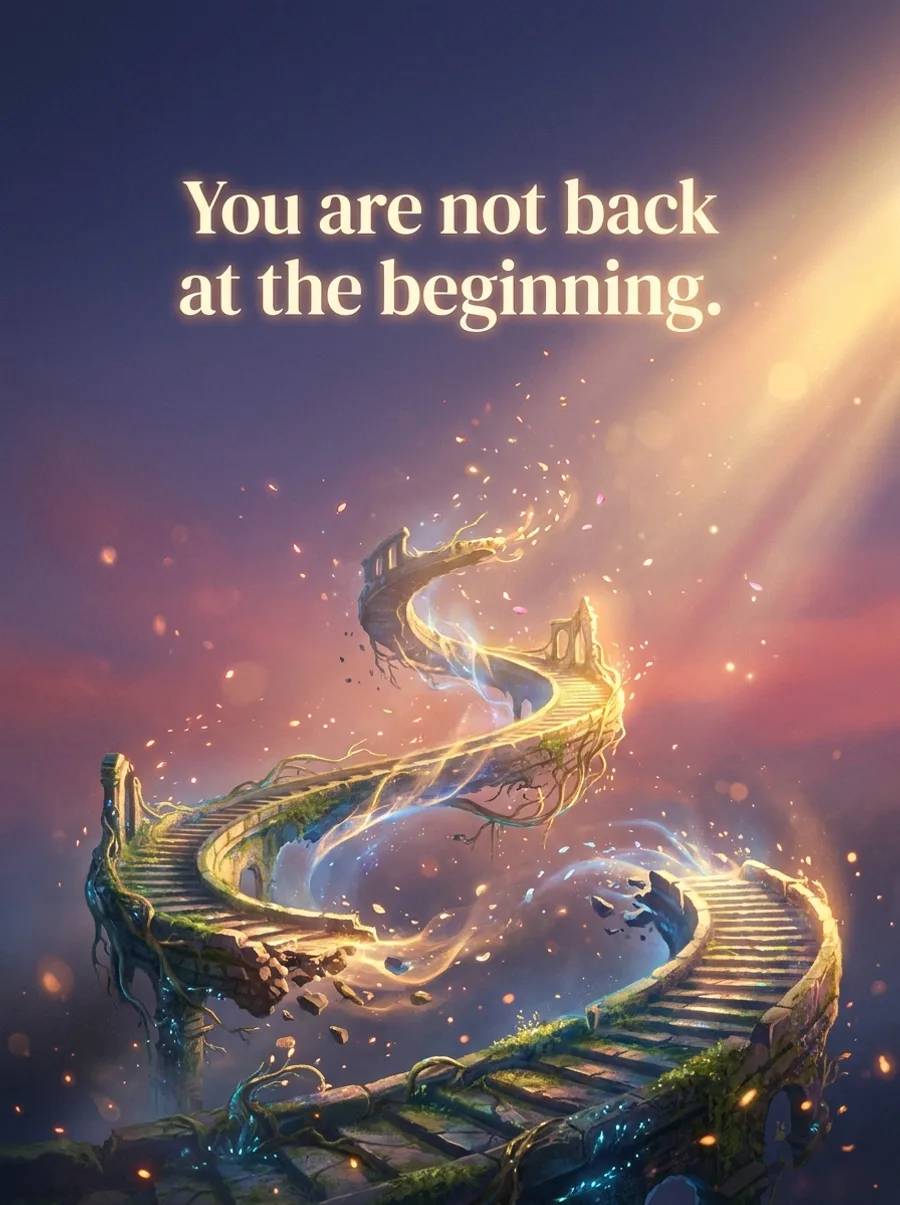
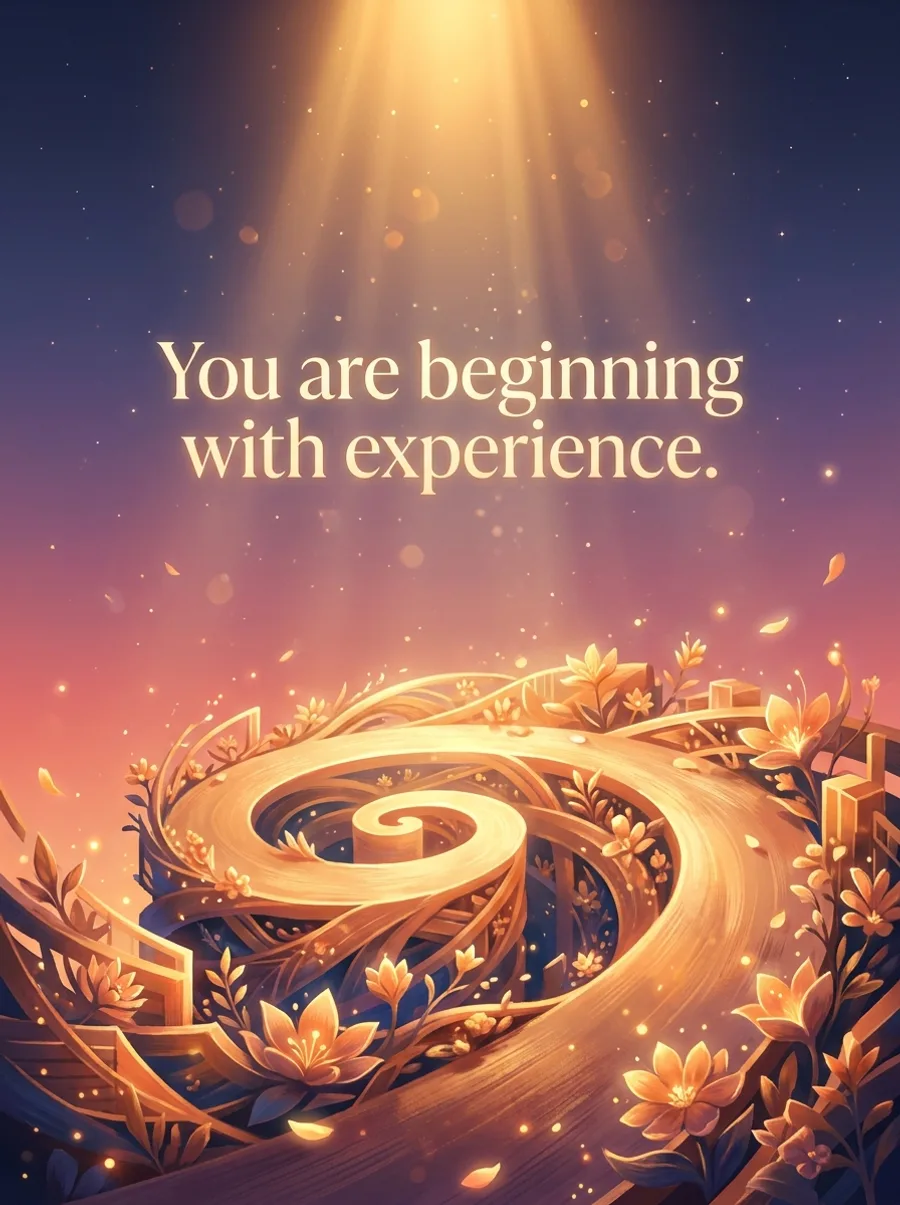
When life demands a radical reset — a career ended, a relationship dissolved, a dream deferred — we often find ourselves standing at the base of a new, crumbling stone path. We look up at an enormous mountain and feel a crushing sense of defeat, convinced we are back at zero. But this is the fundamental misconception of progress. We mistake the base of a new peak for a return to total beginning, forgetting that we carry the lungs and the legs of the climber we’ve become.
The grit we’ve developed doesn’t vanish simply because the terrain has changed. Resilience is the act of shifting our perspective from the daunting verticality ahead to the staggering distance already climbed. We are not novices; we are veterans of our own lives, equipped with the internal map of every previous struggle.
“You are not back at the beginning. / You are beginning with experience.”
The magnificent truth of the swan
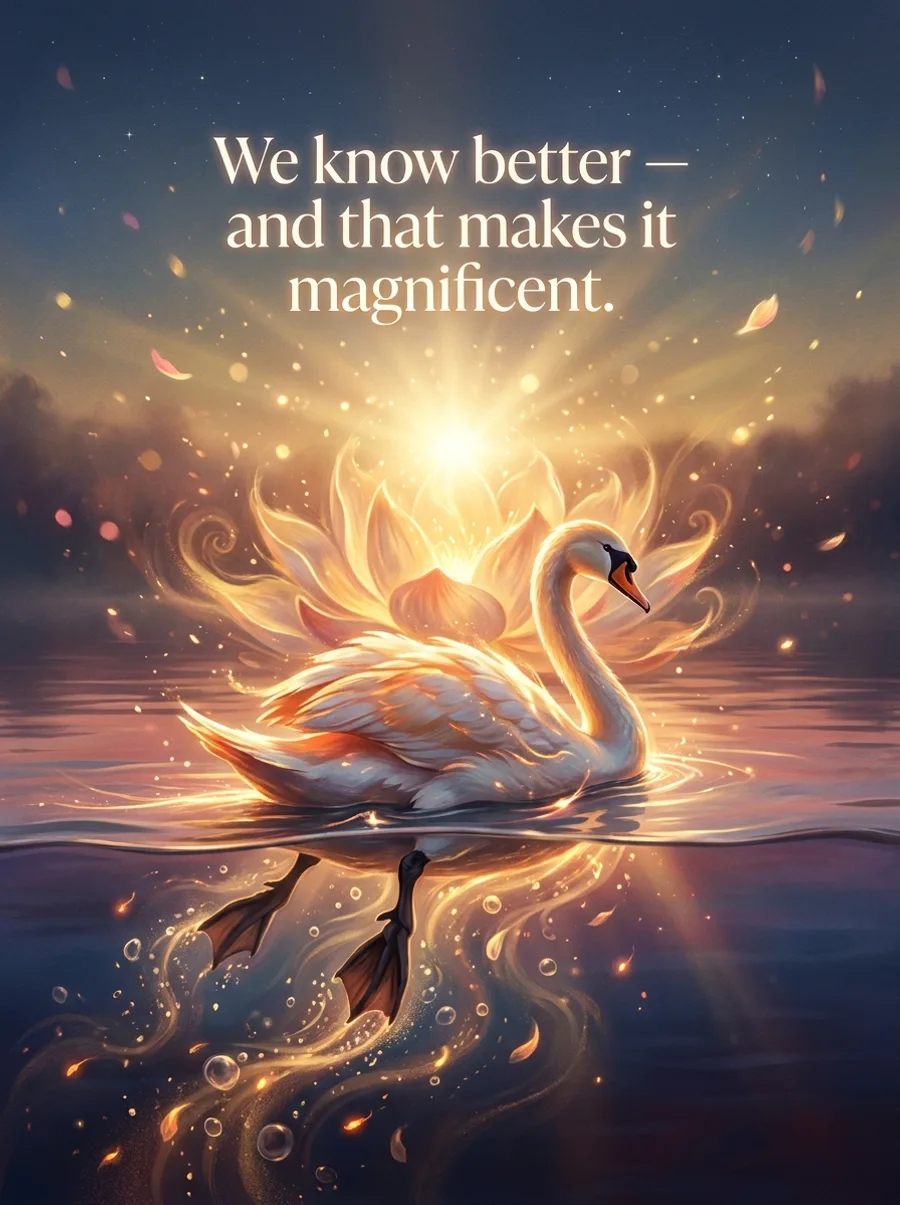
There is a relentless cultural pressure to make the difficult look effortless. We are taught to admire the swan — the elegant, serene figure gliding across the water — while ignoring the frantic, exhausting paddling happening beneath the surface. This is the great performance of modern life, the reality we rarely show the world.
A Lantern Post card is the antidote to this performance. It is a message sent by the person who knows the underwater part of your story. True validation doesn’t come from those who believe the lie of your ease; it comes from the person who sees the grit behind the grace. There is something infinitely more magnificent in a hard-won victory acknowledged by a witness who knows exactly how heavy the weight was.
“You made it look easy. / We know better — and that makes it magnificent.”

The geography of belonging
In our search for security, we often obsess over postcodes and property. We treat home as a physical structure, a collection of rooms and rafters. Yet the architecture of belonging is surprisingly independent of geography. We can travel the world searching for our favorite place, only to realize that the feeling of home is anchored to a person rather than a place.
There is a specific, quiet ache in a room that remains physically identical after someone leaves, yet feels fundamentally emptier. It reveals the truth that a space is merely a shell; the warmth is provided by the presence of the other. When we find the person who makes the search for a destination irrelevant, we realize that home isn’t a coordinate on a map — it’s the space beside them.
“I searched everywhere for my favorite place. / It was beside you.”


The heroic archive of friendship
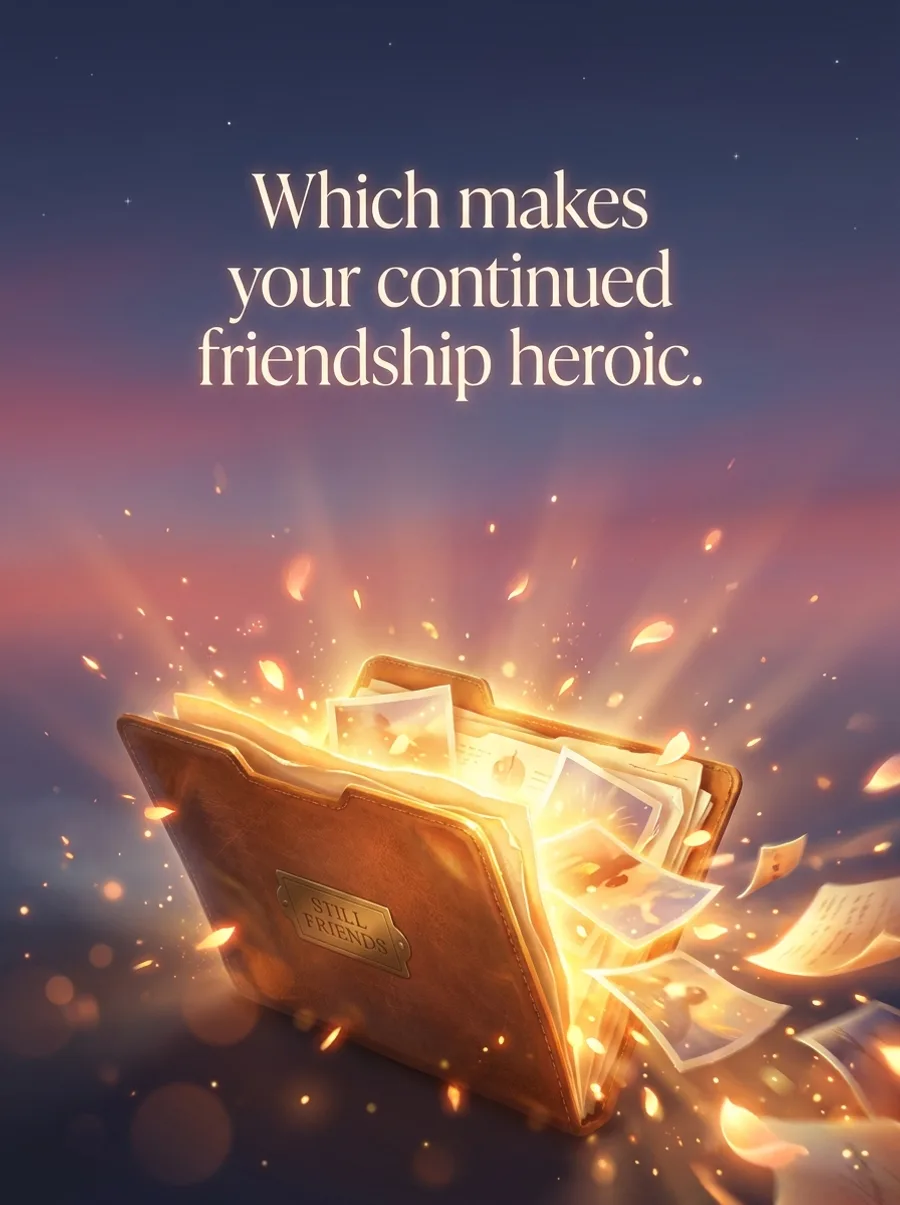
We often speak of long-term friendship as a comfortable habit, but it is more accurately described as a form of quiet heroism. To be friends with someone for a decade or more is to maintain a deliberate archive of their failures, their bad moods, and their most unpolished versions. You have the receipts of each other’s lives.
The heroism lies in the choice to remain. It is the bridge that stays standing even when daily conversation fades into the background noise of busy lives. This connection exists because you know far too much to ever be strangers again, and yet you continue to choose the relationship. Staying on that bridge, knowing everything you know, is one of the most significant honors one human can grant another.
“You know far too much about me. / Which makes your continued friendship heroic.”

The grit of the moving finish line
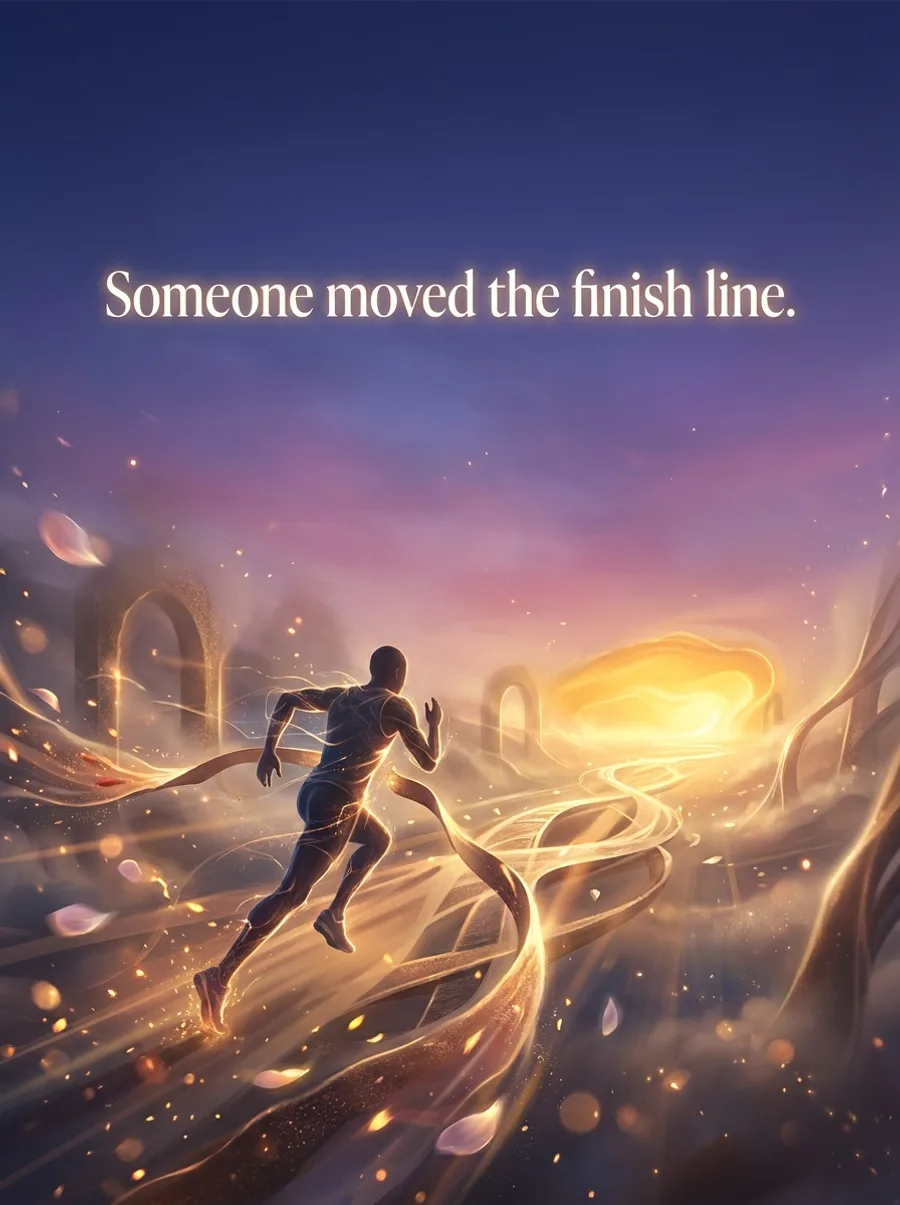
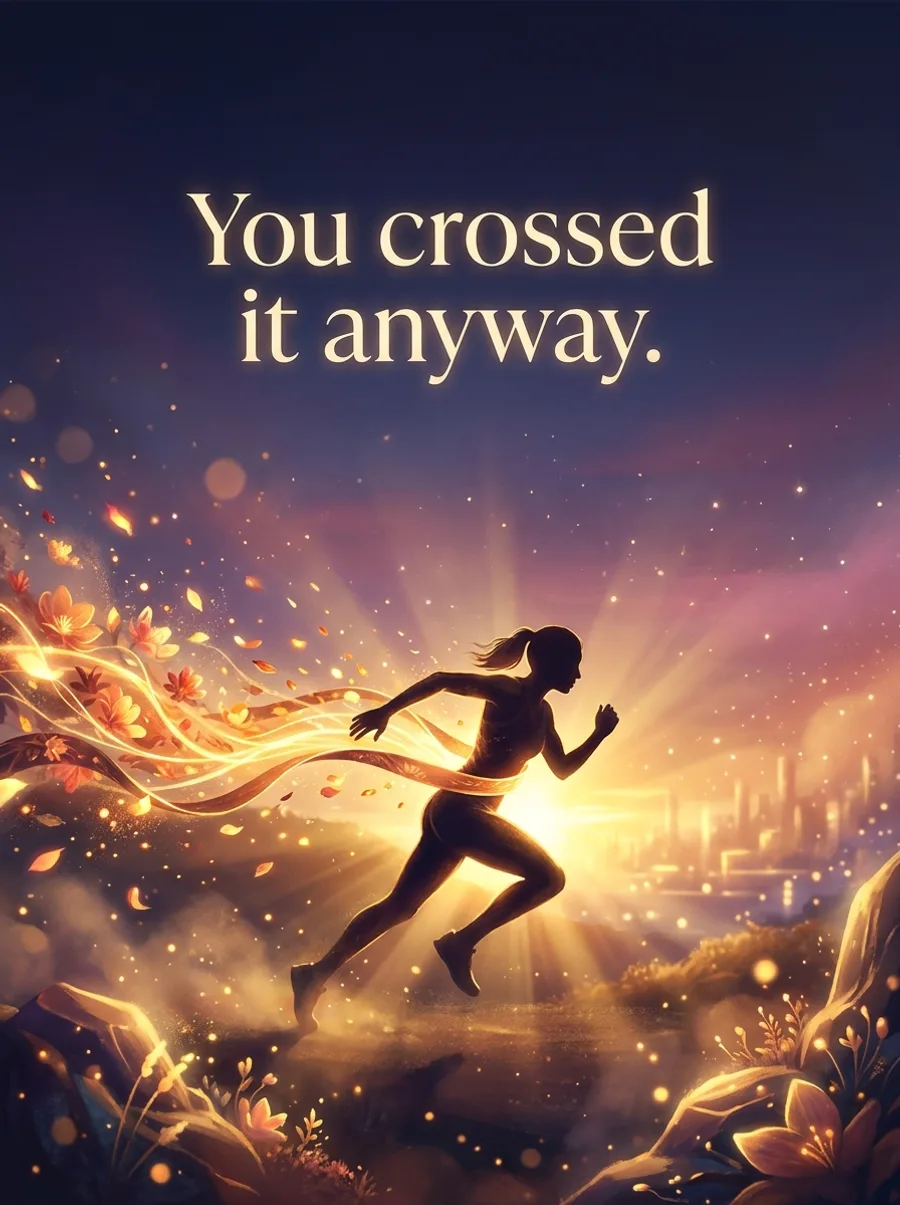
Life has a frustrating tendency to move the finish line just as we’ve found our stride — we run toward a goal, only to find it further down the road, demanding a level of endurance we weren’t prepared to give. These unexpected detours are the ultimate test of our internal resolve.
The victory in these moments isn’t found in the location of the line itself, but in the refusal to stop running when the rules are changed mid-race. It is an act of sheer will to cross a line that wasn’t there when you started. Finishing is the proof that the runner is more powerful than the race — an extraordinary display of character that persists regardless of where the goalposts land.
“Someone moved the finish line. / You crossed it anyway.”
The lantern keeps its promise
There is a reason the reveal feels like a gift rather than a link. A Lantern Post card is a small act of theater: the person you love opens it under a night sky, reads the front, reads the inside — and then finds a lantern glowing beneath the words, holding something you chose just for them. The surprise is the point. You are not forwarding content; you are tailoring a moment — this song, this verse, this story, for this person — sealed until their touch releases it.
And the theater rests on something unglamorous and rare: trust, built in. Every reveal a card can carry comes from a verified home — checked when you light the card, and checked again in the very moment it is opened. The link that carries your card is verified and unlisted. The QR on a printed card opens the same verified card on every scan. On an internet where every unexpected link is a small act of suspicion, a lantern is the opposite: a link that has already earned the tap. That is the quiet engineering beneath the poetry — the moat that makes the magic safe to believe.
Passing the light forward
These small, verified reveals — a song that captures a memory, a story that offers a mirror, a verse that provides a map — act as digital lanterns. They are focused bursts of light designed to bridge the gaps between us and acknowledge the hidden struggles we all carry. In a world that often feels dark or indifferent, the act of sending a light is a reminder that we are seen. And the light does not stop where it lands. The person who opens your card receives a lantern of their own to send onward, free — a whispered line, a new flame, the light passed hand to hand.
Who in your life needs a reminder of the distance they’ve already covered? Who needs to be told that their effortless performance hasn’t fooled you — and that you find their struggle magnificent? By choosing to share these moments of resonance, we participate in a beautiful, multiplicative truth: joy doubles every time it’s shared.
Light is not meant to be stared at. It is meant to be carried — and to be handed on.